The Lehigh Valley Economic Review
Analysis of inflation, housing sales and volume, deed and permit registrations, the local and national labor market, and our quarterly survey of Lehigh Valley businesses. 10 issues, free to read.
Browse issues
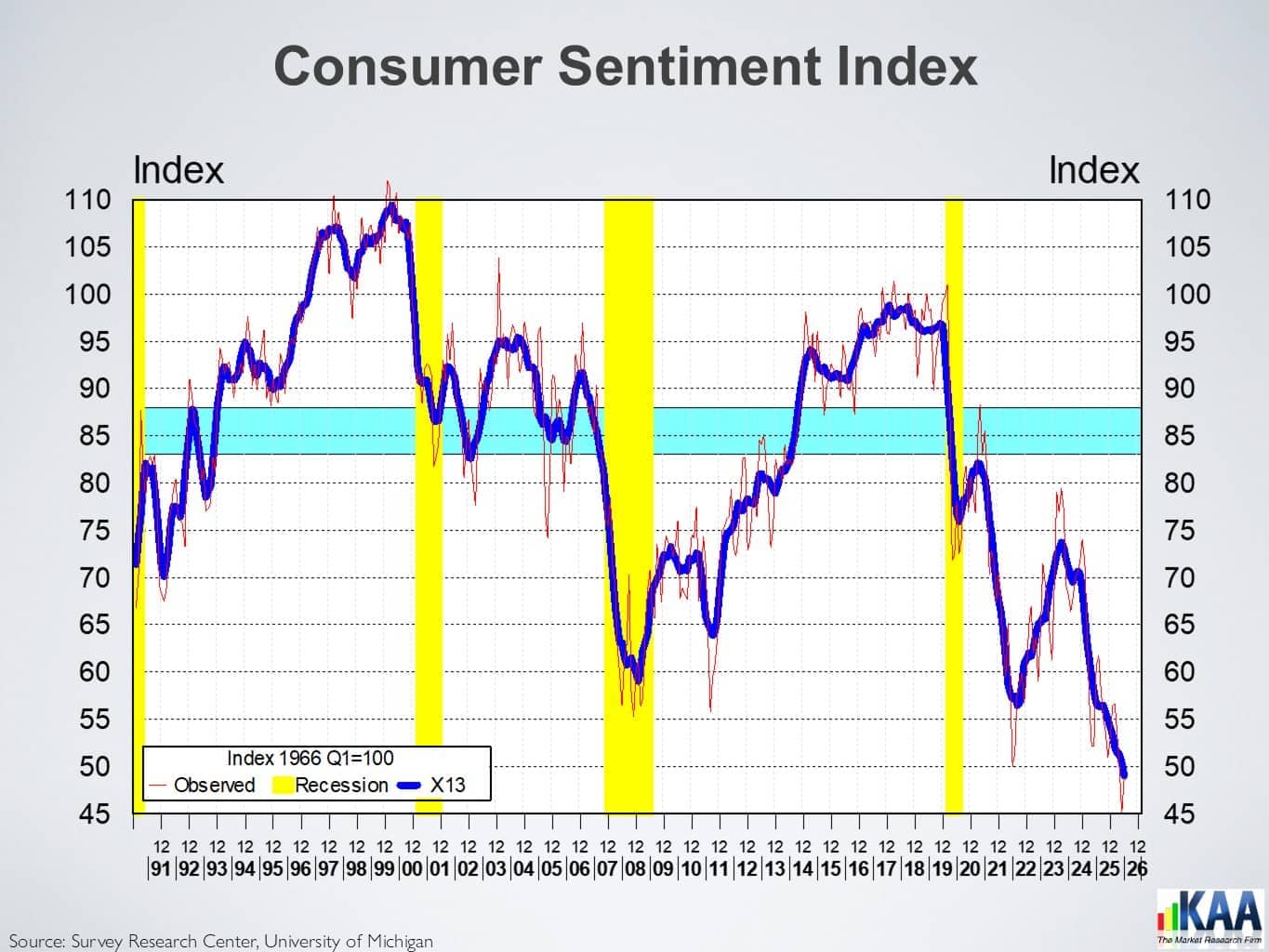
Consumer Sentiment 19% down from last year
The June Consumer Sentiment data showed a 5 point increase from its lowest level ever, 44.8, in May, mostly due to a drop in gasoline prices, particularly among lower-income households, where “gasoline comprises a larger share of their budgets,” according to the University of Michigan. However, even with the June increase, it is 19% below its last year’s level and still below its lowest level during the Great Recession!
Read the issue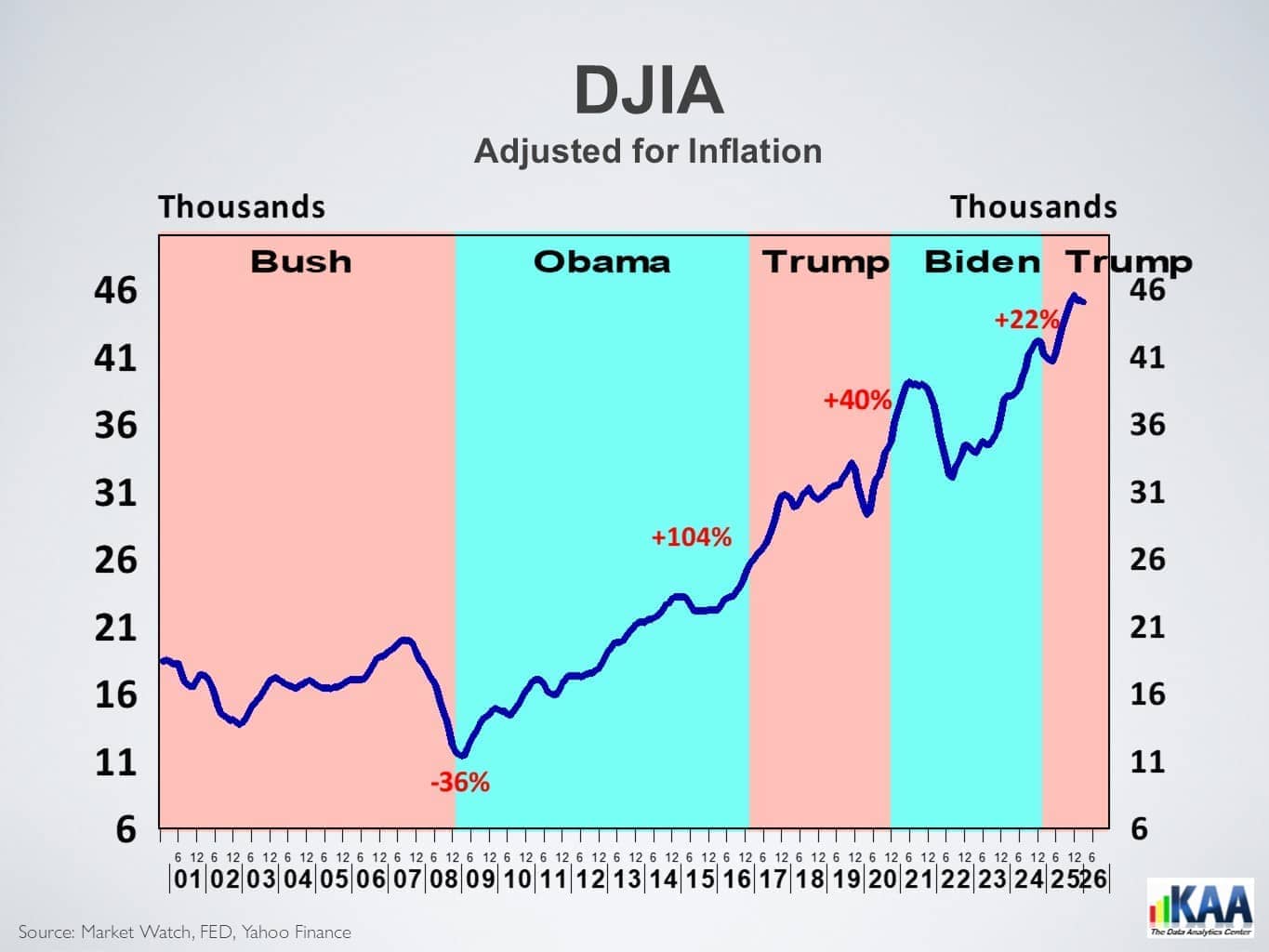
The Quiet Constant: Why Market Momentum Ignores the Noise
We often assume politics drives the market’s daily performance. But since 1950, over 75 years of growth, the data suggest the market plays its own song—driven more by global energy, technological innovation, and corporate earnings than by the daily news cycle
Read the issue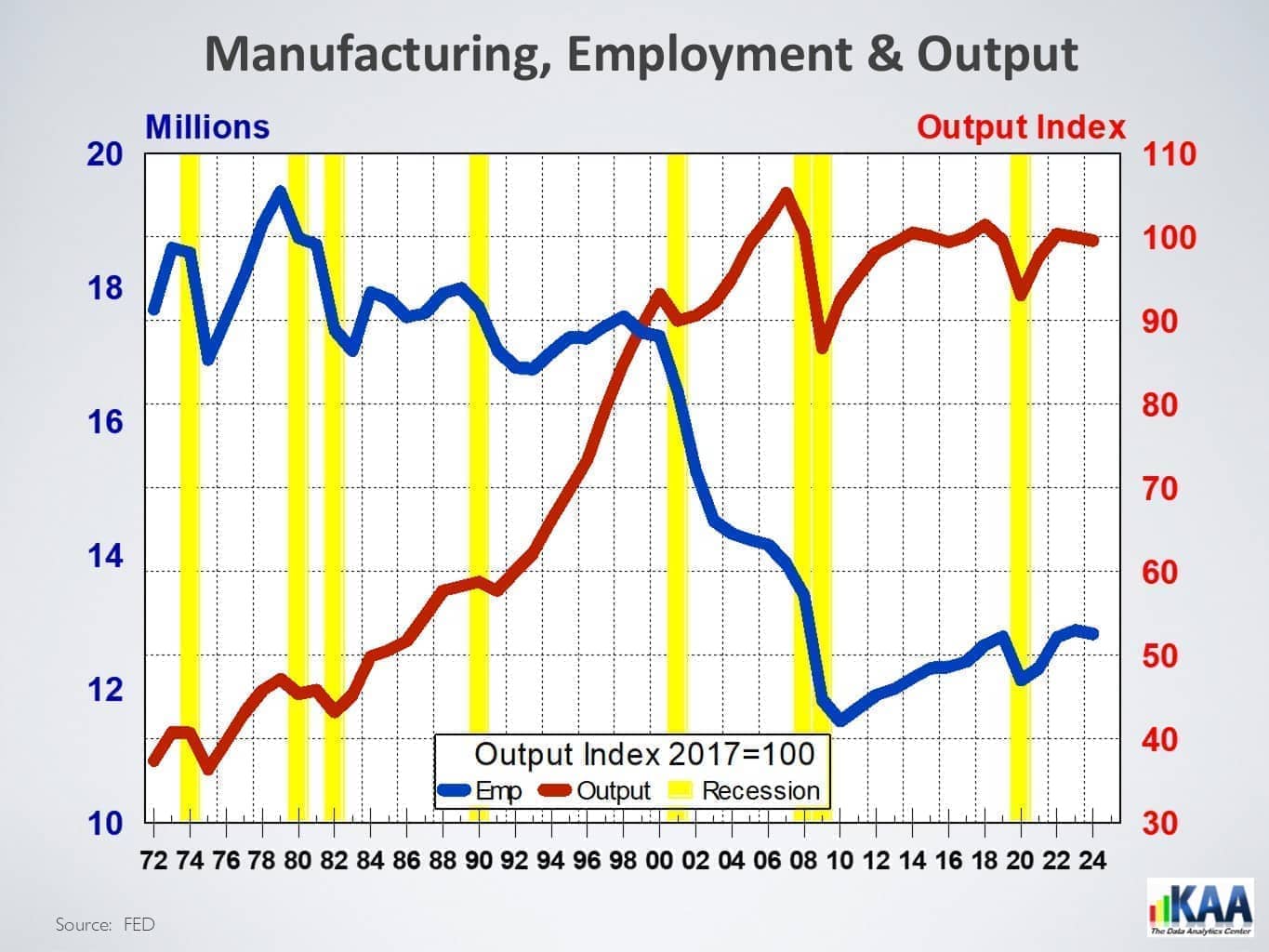
What happened to manufacturing? Are we producing anything anymore?
I am often asked if we still produce anything. Manufacturing, particularly in the Lehigh Valley, is a very sensitive subject. Manufacturing was the lifeline of the Valley in the 1970s; nearly half of all workers were employed by a manufacturing company. And they used to pay more than most other jobs. That is what people remember, but that has all changed in the Valley; now, manufacturing jobs account for a little more than one out of ten local jobs, and many other jobs pay better than manufacturing.
Read the issue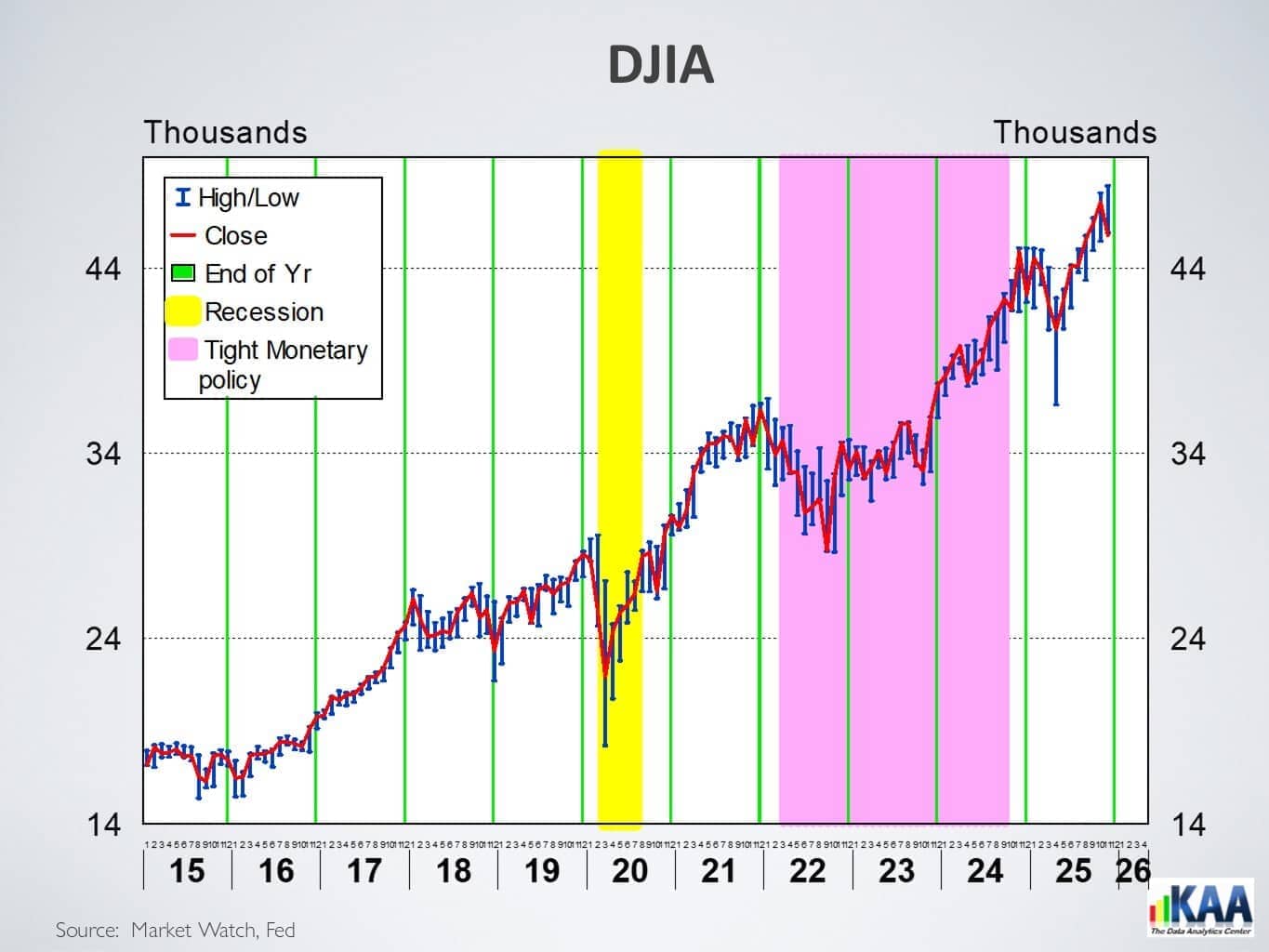
AI Frenzy Drives Dow, But Economy Lags Behind
In the absence of GDP updates, the best data point for assessing the economy's growth is personal consumption expenditures, which accounts for almost 70% of GDP and has a 93% correlation with it. Based on that, our model estimates 2.4% growth in GDP. The DJIA, as of the end of October and before the recent corrections, had increased by almost 11% after inflation adjustment, more than four times the economy's growth.
Read the issue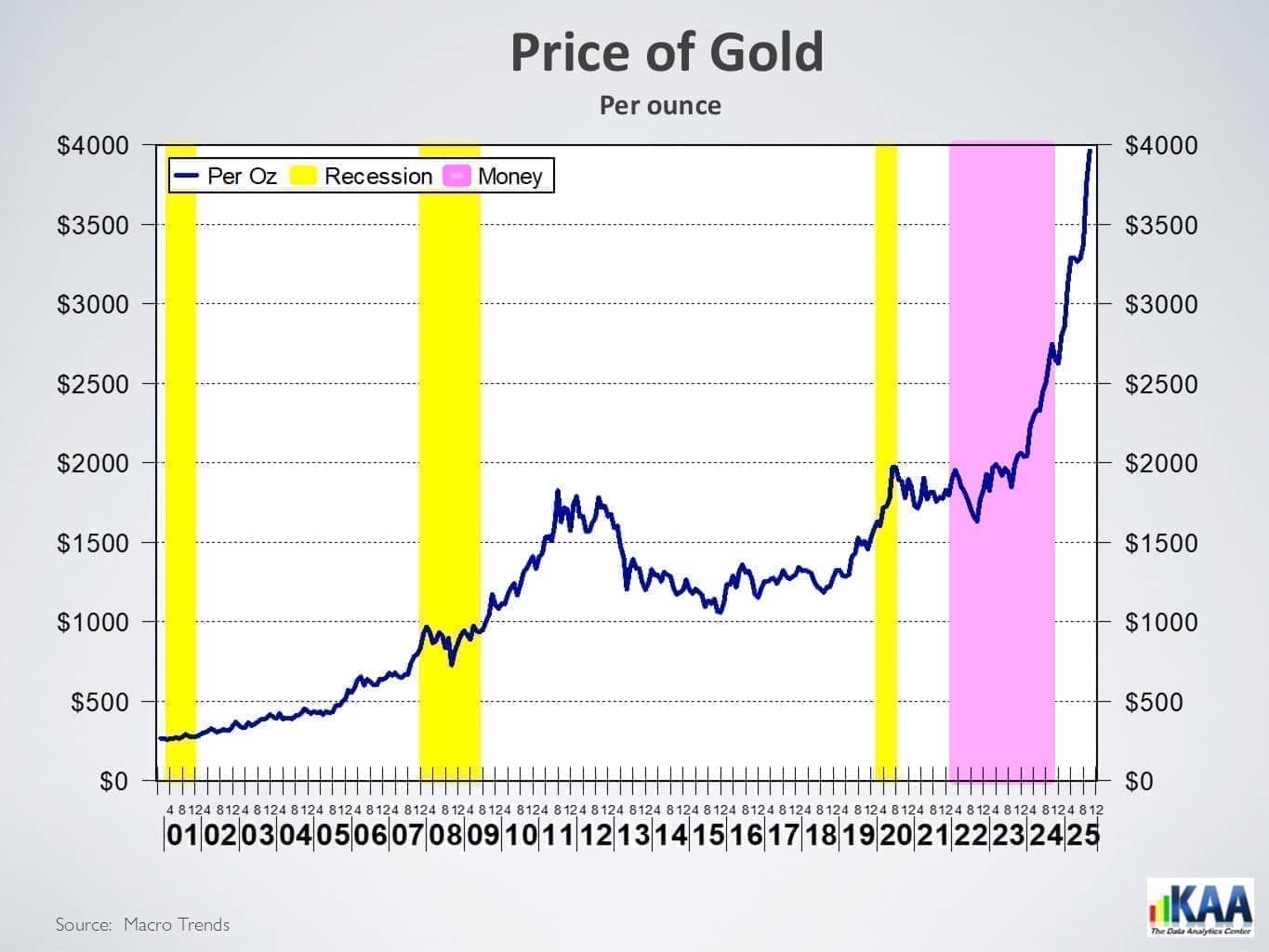
Gold Breaks $4,000: A Historic Surge
For the first time in history, the price of gold has surpassed $4,000 per ounce, as of this writing, marking a dramatic 51% increase since the beginning of the year. This milestone is more than a headline—it’s a signal of deep economic unease and a resurgence of gold’s role as a safe-haven asset.
Read the issue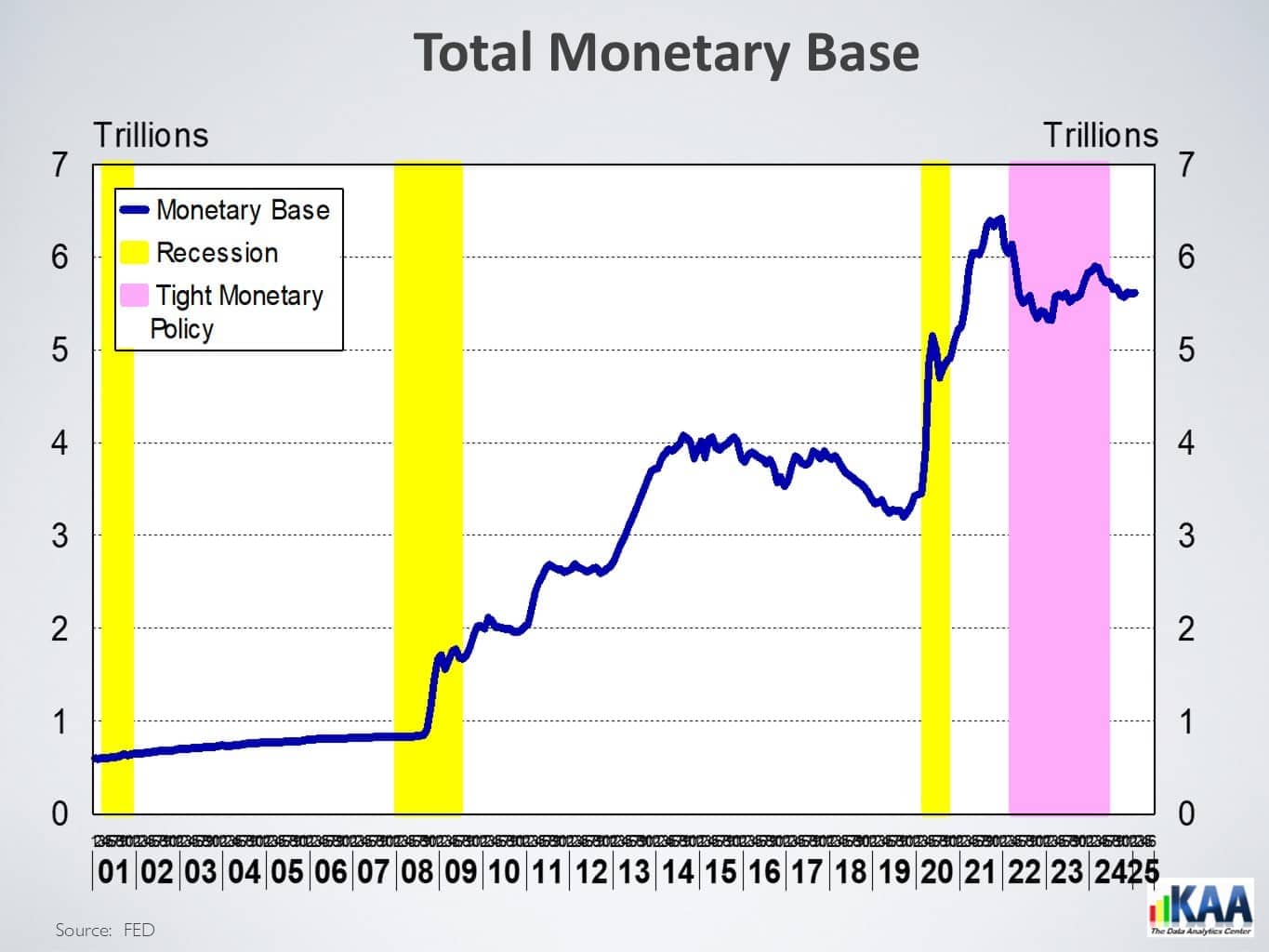
The FED Holds Steady on Interest Rates
After increasing rates 11 times from March 2022 to July 2023, the FED implemented three rate cuts between September and December of last year. In March, it held rates steady, announcing that “we now have inflation coming in from an exogenous source, but the underlying inflationary picture before that was basically 2.5% inflation, 2% growth and 4% unemployment.”
Read the issue
Artificial Intelligence
AI became the news of the week after the arrival of DeepSeek, the Chinese AI that does not require advanced computer chips and thus does not require an entire power plant to operate!But what is AI? I used to tell my students this was a misnomer, as the program was not intelligent. It may have extreme amounts of information about a subject but is unaware of simple things that a child of 4 readily knows. Also, the word artificial is inaccurate since the program depends on the very real intelligence of its programmer. I asked ChatGPT about my definition; it mostly agreed with my description, although it said modern AI, particularly machine learning models, are not purely hand-coded. I think it used the word modern to make fun of my age and reliance on writing code! The program can learn from large amounts of data; however, this is not beyond its programming since the programmer directs the AI to gather and analyze new information.
Read the issue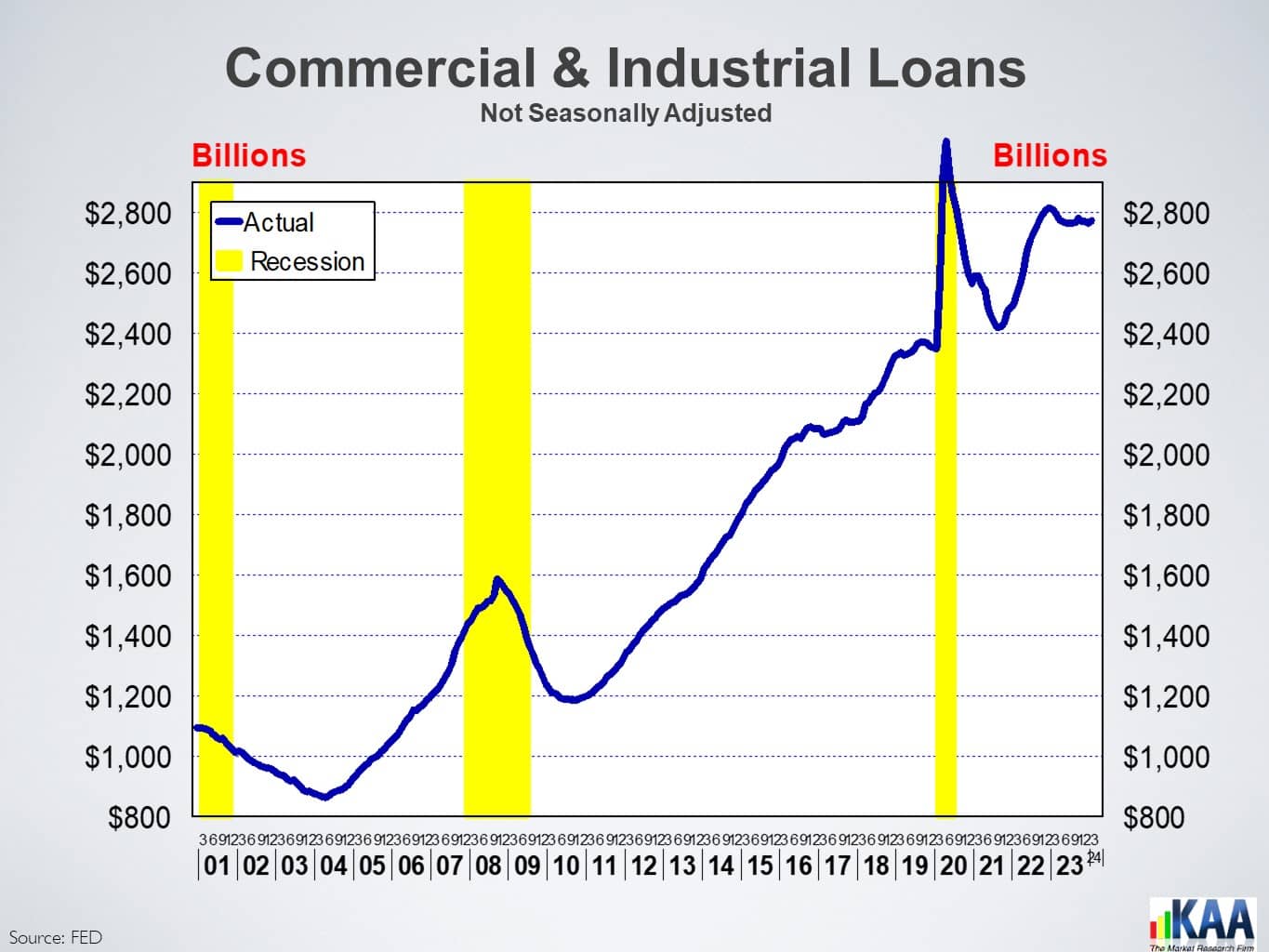
Business borrowing, how does it affect the economy?
Of all the indicators of the economy's future growth, the volume and change in the level of business borrowing stand out as significant barometers of future economic activity. Business borrowing is typically for expansion purposes. Banks do not easily grant loans solely to cover payroll expenses, especially not on a recurring basis. Banks lend money primarily to entities that do not urgently require the loans. To be fair, banks are also businesses themselves and must ensure a reasonable certainty of debt repayment.
Read the issue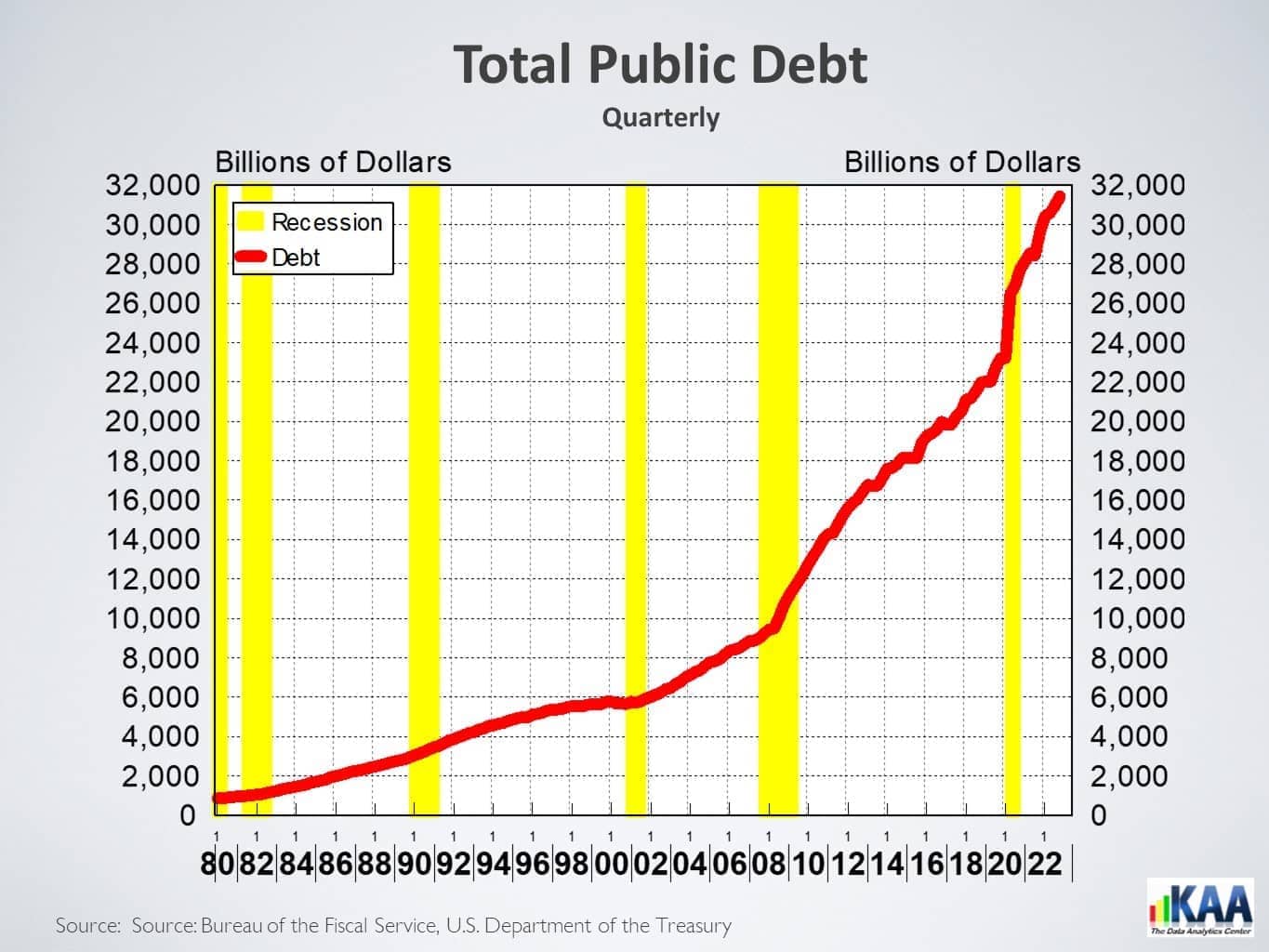
Our national debt is now larger than our GDP, is it possible to reduce the debt
The national debt is now at $31 trillion and will continue to rise. At this level, it is 119% of the country's Gross Domestic Product. Yes, the national debt is larger than the GDP, and it has been since 2015. However, as high as the debt is, it is not the first time that debt has exceeded the GDP; at WWII's end, the debt stood at 121% of the GDP. And much closer to the present, during the 2nd quarter of 2020, national debt rose to 135% of the GDP, even higher than after WWII. The interest payment on the WWII debt was less than 1.8% of the GDP, which is obviously due to the very low interest rates of the time.
Read the issue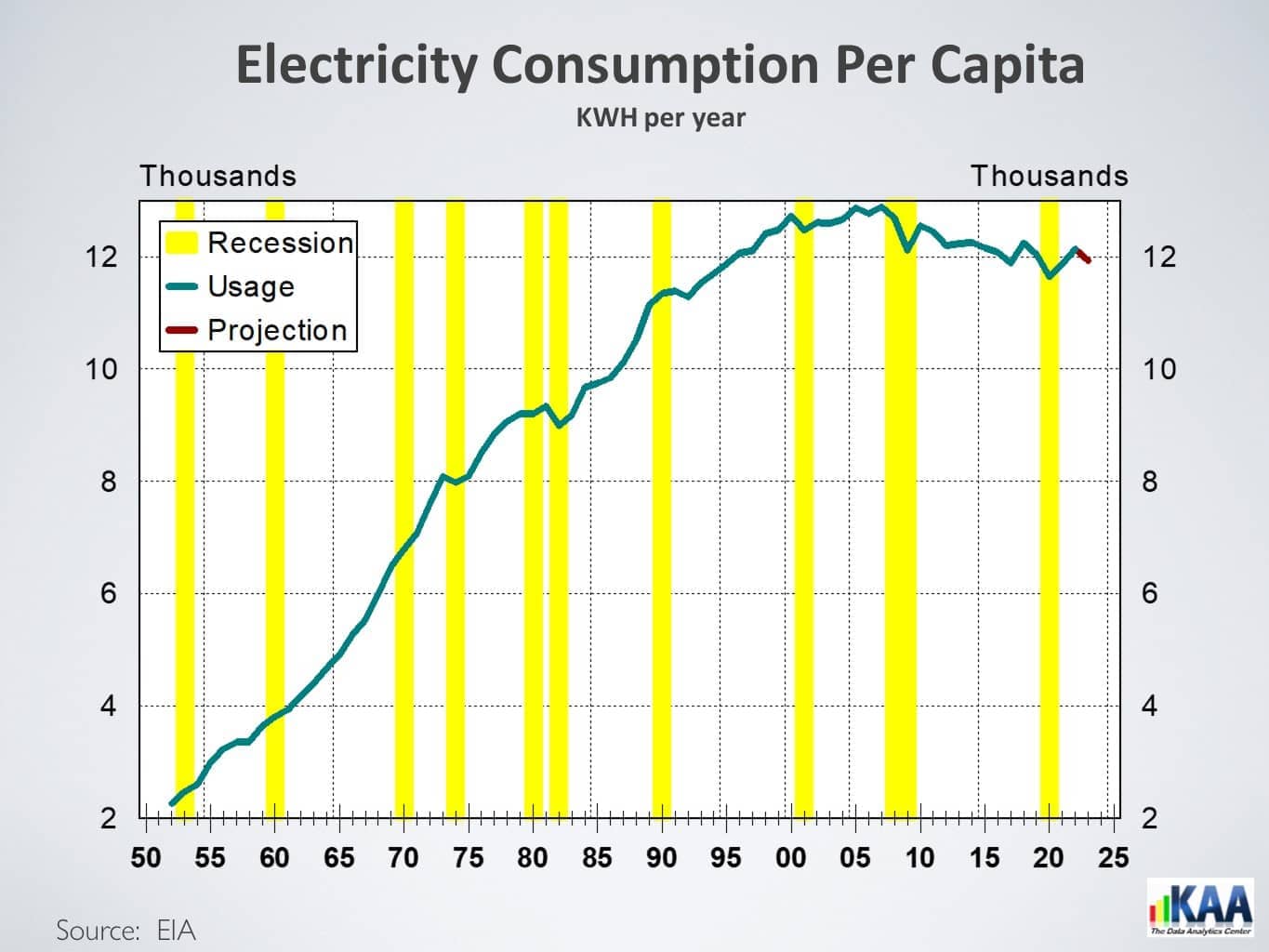
We are using less electricity
According to the US Energy Information Administration, we use less electricity per capita. While we have increased our electrical usage by 16% this century, US population increased by 20% during the same period. On a per capita basis we have reduced our electrical consumption by 3% since the beginning of this century.
Read the issueRead the Review as it publishes.
Each issue, with that week’s Economic Pulse segment from WDIY, delivered the morning it airs.
Never shared or sold. Unsubscribe in one click.